
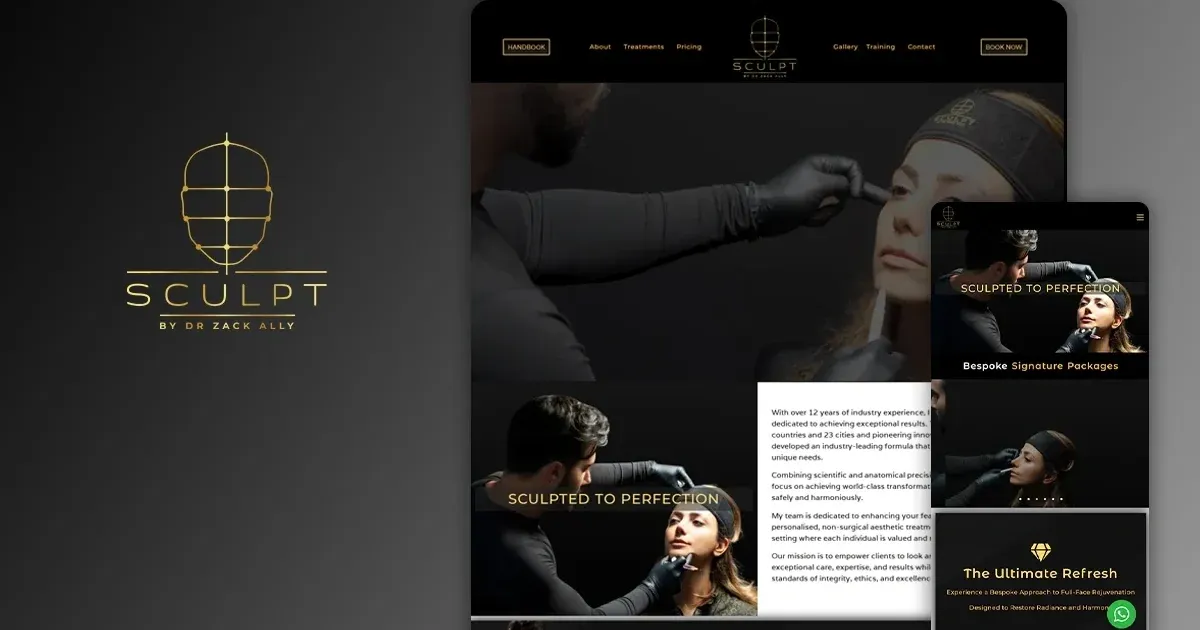
Sculpt Clinic
A website for Dr Zack Ally’s non-surgical aesthetics clinic, designed to make treatments, pricing and training information easy to find for two different audiences.
Website development · Direct client partnershipExplore the case studyWe plan the pages, design around your content and build an editable website. The same team takes it through launch and a documented handover.
A website for Dr Zack Ally’s non-surgical aesthetics clinic, designed to make treatments, pricing and training information easy to find for two different audiences.
Website development · Direct client partnershipExplore the case studyMarketing sites, redesigns and campaign pages, with reusable components for the people who manage your content. We agree the page types, features and exclusions before starting.
Agree the audience, page types and features. Map the site and identify the content and access we need.
Design the key pages around your content and brand, including mobile layouts and reusable components.
Develop the approved designs on a staging site for review, then check performance and accessibility.
Prepare for launch and show you how to edit the site. Deliver the files, access and documentation.
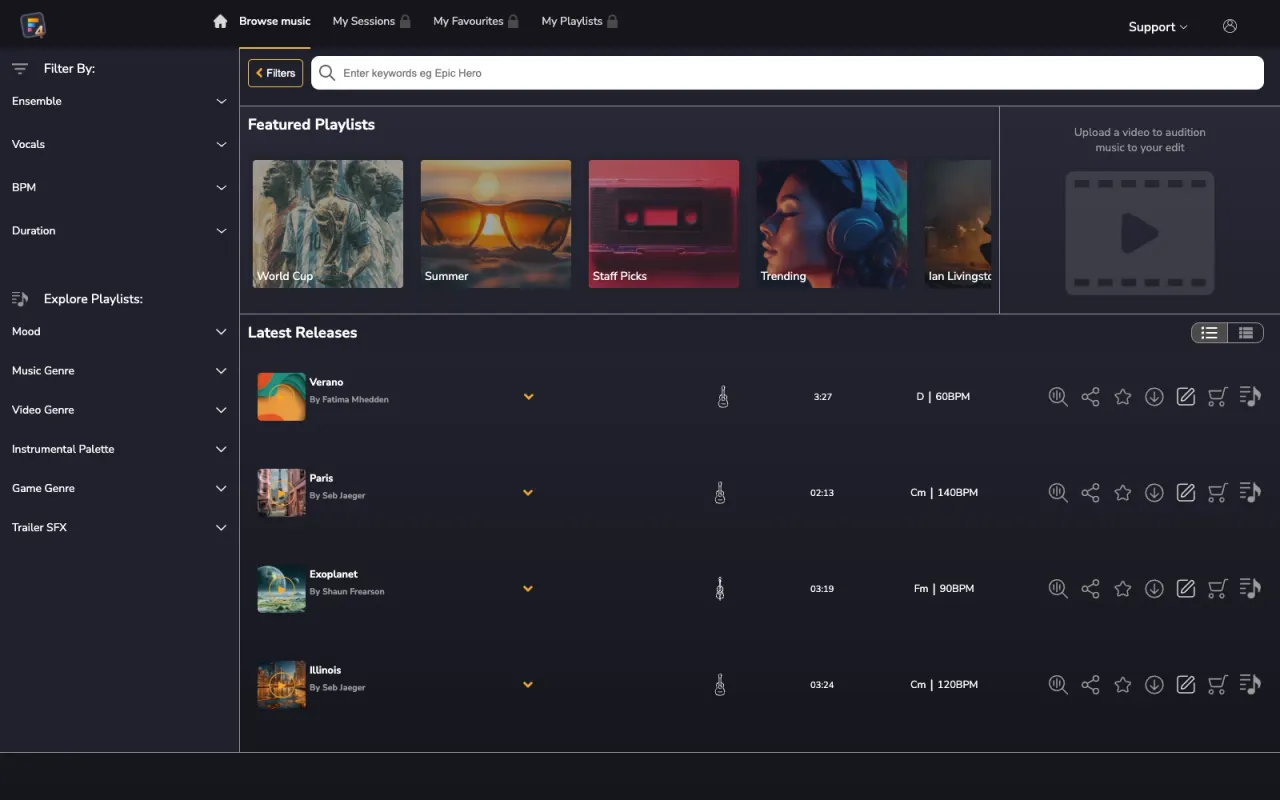
A browser-based music editor for filmmakers and content creators, designed around three expressive sound controls and a length-adaptive editing workflow.
UX/UI design & frontend development · Vue 3 · 2022–ongoingExplore the case study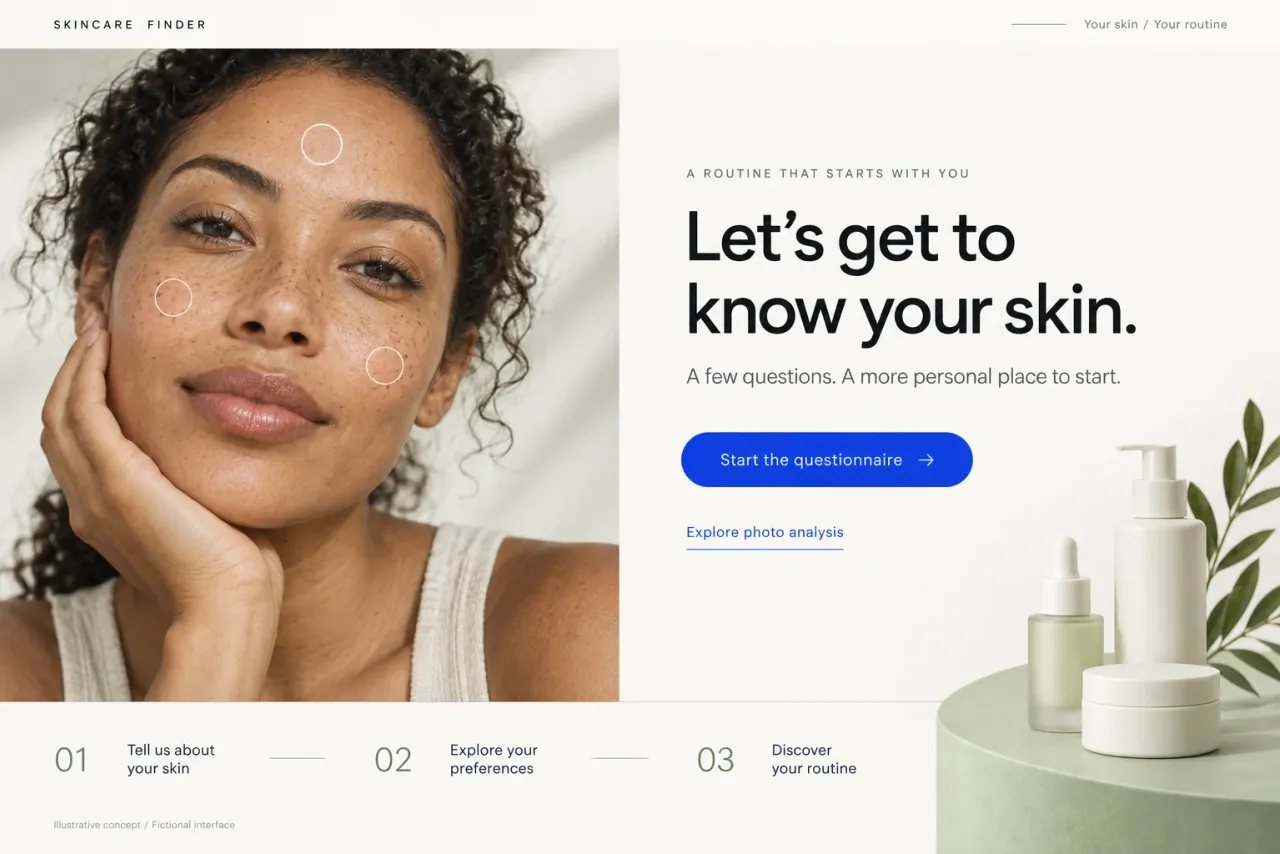
An interactive product finder for a UK skincare brand, designed around two routes to a recommendation — a guided questionnaire or a selfie-based skin report.
Lead development within an agency team · Vue.js · 2023Explore the case studyYes, we can design your website around your existing brand. We use your existing guidelines and document any additional components or responsive layouts the website needs. A website usually needs more than the guidelines contain, such as page layouts, mobile layouts and reusable components for the people who manage your content. We design the key pages around your content and brand in Figma, and the files are organised into components and layouts. During scoping we agree the audience, the page types and the features, and we identify the content and access we need from you, which includes the brand files. The approved design is then developed into an editable website, with the code in a repository you own. At handover you receive the design files, a content-editing guide and a record of anything outside the agreed scope, so the additions we made to the brand for the web are written down.
No, you do not need all the content ready before a web design project starts. We design with your real headings, images and copy. If some content is still being written, we start from an agreed outline and review the finished content before launch. We agree who supplies the content and when it is needed. The scope stage produces a sitemap and written page outlines showing what each page needs to do, and it identifies the content and access we need from you. Layouts are built around your content, and before launch we test with realistic content and not placeholder text. Content readiness also affects the schedule, alongside design and development, which is why the delivery date is agreed after scoping. If something in the brief will not work, you hear it at the scoping stage. After launch your team can keep editing the site, and the handover includes a content-editing guide.
We treat performance and accessibility as design and build decisions and agree them early. We agree a page speed target before design starts. We plan contrast, focus states, touch targets and heading order, then check keyboard navigation in the working site. These decisions guide the layouts, images and interactions. Every web design project includes quality checks against the agreed page speed target, responsive layouts and accessibility checks. The approved designs are developed on a staging site for review, and performance and accessibility are checked there before launch. On our builds, page speed, keyboard access, heading structure, metadata, canonical tags and redirects are part of the build and are checked before launch. They are not a separate engagement. Testing covers real devices as well as accessibility and performance checks against the budget agreed at scope. If your project has a specific accessibility requirement, tell us at scoping so it can be agreed alongside the page types and features.
Yes, we redesign existing websites. We plan which content and URLs to retain and what needs to change. Redesigns sit alongside marketing sites and campaign pages as part of our web design work, with reusable components for the people who manage your content. The scope stage agrees the audience, the page types and the features, maps the site, and identifies the content and access we need. The key pages are then designed around your content and brand, including mobile layouts, and the approved designs are developed on a staging site for you to review. Redirects, analytics, monitoring and Google Search Console setup are part of launch day. At handover you receive the files, access and documentation, a content-editing guide and a record of anything outside the agreed scope. Where the project involves moving platforms or content, see our CMS migration service, which covers URL inventories, redirect maps and carrying metadata across.
Yes, the design files are yours, so you can take the design to another developer to be built. This service brings design and development together, so tell us during scoping if another developer will handle the build. We can then clarify the handover requirements. The design deliverables are a sitemap, written page outlines showing what each page needs to do, and Figma files with organised components and layouts built around your content. Those files include the mobile layouts and the reusable components as well as the key pages. When we do build the site ourselves, the approved design is developed into an editable website with the code in a repository you own, so the same principle applies to the code as to the design. Either way, the handover includes a record of anything outside the agreed scope. If you are undecided, say so at scoping and we will agree the page types, features and exclusions with both routes in mind.
No, we build from the design and not from a purchased theme. If an off-the-shelf theme is a suitable option for your project, we will discuss that with you before you commit to a custom build. In a web design project we plan the pages, design around your content and build an editable website. The design is made in Figma with organised components and layouts built around your content, and the approved design is developed into the website. Reusable components are included for the people who manage your content. The content model is designed around how you actually publish. Every project includes an agreed page speed target, responsive layouts and accessibility checks, and the code sits in a repository you own. We agree the page types, features and exclusions before starting, so the decision between a theme and a custom build is made at scoping, with the reasoning.
There is no standard duration for a website. We agree a delivery date after scoping the page types, features and content requirements. Content readiness and review availability affect the schedule alongside design and development. The project runs in four steps. Scope agrees the audience, page types and features, maps the site and identifies the content and access we need. Design covers the key pages around your content and brand, including mobile layouts and reusable components. Build develops the approved designs on a staging site for review, then checks performance and accessibility. Handover prepares for launch, shows you how to edit the site and delivers the files, access and documentation. When you contact us, tell us what the site has to do and when it needs to be live. If something in the brief will not work, you hear it at the scoping stage. If a date is at risk during the project, you find out while there is still time to act.
After launch you can manage the site yourself or arrange optional website support. Hosting and ongoing maintenance can be scoped separately from the build. The website is editable, with reusable components for the people who manage your content, and the handover includes a content-editing guide and we show you how to edit the site. You also receive the files, access and documentation, and a record of anything outside the agreed scope. The code is in a repository you own, with a README that tells a developer how to run it, and nothing in it only works while we are involved. You are not locked in. If you would rather we kept running the site, hosting and support are separate, optional agreements, and they remain optional. Redirects, analytics, monitoring and Google Search Console setup are part of launch day and not a follow-up ticket.
Felix Web Solutions is based in London and works with businesses directly and through agency partnerships. See the areas we cover for our local service pages, which cover New Malden, Kingston, Surbiton, Tolworth, Richmond, Twickenham and Wimbledon in south-west London. During a web design project, work goes to a staging site you can look at during the build, you have one named contact, and check-ins run on a fixed rhythm agreed at the start. Decisions, scope changes and recommendations are confirmed in writing. The handover is documented, with the files, access and a content-editing guide, and we show you how to edit the site. If you are an agency looking for a build partner, we also work white-label, where you brief us, we report to you, and your client hears from you. Tell us what the site has to do and when it needs to be live.
Explore the page structures, content requirements and booking or enquiry journeys for these industries, with examples from our completed work.
Tell us what the site has to do and when it needs to be live. If we are not the right people for it, you will hear that first.
Or email us at [email protected].
Agency looking for a build partner? We work white-label