Web development, from a marketing site to a working application
Felix Web Solutions is a London studio that builds websites and web applications. Some projects are a website. Some are software with a website attached. We build both and recommend the tools that fit your requirements before you commit to a budget.
Bring the problem, not a specification. We will help write that part.
01In practice
A project like yours
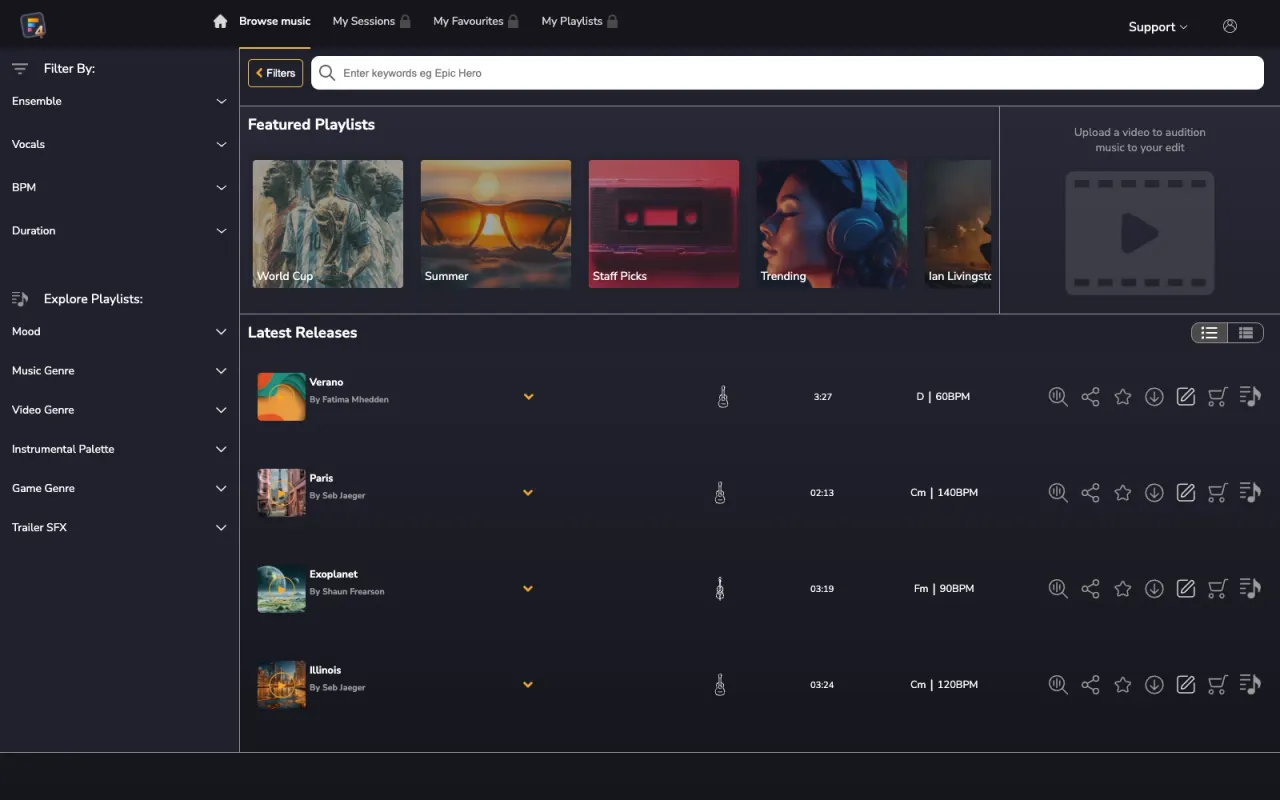
Filmstro Pro
A browser-based music-editing application built for Filmstro, combining a custom audio engine, an adaptive duration algorithm and licensed export in one workflow.
We build marketing and content sites, custom web applications and headless builds. We also connect sites to the systems that run the business, and take on rescue and performance work.
Based in south-west London? See where we work for local pages covering New Malden, Kingston, Surbiton, Tolworth, Richmond, Twickenham and Wimbledon.
Marketing and content sites
The site that has to load fast, rank, and be editable by someone who is not technical. Built from a design rather than a purchased theme, with the content model designed around how you actually publish.
Portals, dashboards, booking and quoting systems, member areas, internal tools — the things that start as a spreadsheet and stop working at about thirty users. Built with real accounts, permissions, an audit trail and somewhere for the data to go.
If it is specifically about customer records, quotes and internal process, see CRM and intranets.
If your platform also needs a dedicated mobile experience, explore our mobile app development.
Headless and decoupled builds
A modern front end with a CMS behind it that your team already knows how to use. A Next.js or Nuxt front end can connect to WordPress, Shopify or another CMS, keeping content management familiar while giving you control over the customer experience.
Connecting the site to the systems that already run the business — payment providers, CRMs, stock and accounting systems, email platforms, internal databases. Including the ones with documentation written in 2013.
Rescue and performance work
Core Web Vitals, a site that has become slow, a build nobody can deploy any more, a half-finished build from another developer, or a codebase whose author has gone. We take these on. It usually starts with a written assessment of what is there, what is wrong and what is salvageable, which is a smaller commitment than a rebuild and often avoids one.
03Method
How do you build, and with which technologies?
The stack we use, and why
We work with Next.js, React, Vue and Nuxt for websites and web applications, WordPress for content-managed sites, and Shopify and WooCommerce for online stores.
For custom applications, we choose the backend and database around your data and integrations, including PHP, MySQL and Postgres. We consider your existing systems, editing needs, budget and ongoing maintenance before recommending a stack.
These are examples of the tools we use. If your project uses another stack, share the details and we’ll confirm the fit during scoping.
Performance, accessibility and search are build tasks
Page speed, keyboard access, heading structure, metadata, canonical tags and redirects are part of the build and are checked before launch. They are not a separate engagement and they are not something an SEO consultant raises three weeks after you go live.
You get the repository
Every project ends with the code in a repository you own, yours from the first commit, with a readable commit history and a README that tells a developer how to run it. No licence conditions of ours attached to it, and nothing in it that only works while we are involved.
04Engagement
How does a web development project run?
01
Scope. We agree what it does, what it does not do, and what we have assumed. In writing. If something in the brief will not work, you hear it here rather than in week six.
02
Build. Work goes into your repository in reviewable pieces, on a fixed check-in rhythm, with one named contact. You can see it running on a staging URL from early on.
03
Test. Functional testing, real devices, accessibility and performance checks against the budget agreed at scope.
04
Launch. Redirects, analytics, monitoring and Google Search Console setup are part of launch day, not a follow-up ticket.
05
Handover. Documented setup, deployment instructions and environment variables, deployed and walked through on a call with whoever is taking it on.
05After launch
What happens after the site launches?
You are not locked in. If you would rather we kept running it, support and maintenance and hosting are separate, optional agreements — and remain optional.
Applications are different from sites in one respect worth saying plainly: software that is used every day will need changes. We would rather agree how those get requested and paid for before launch than have that conversation for the first time when something is urgent.
06Proof
Selected work
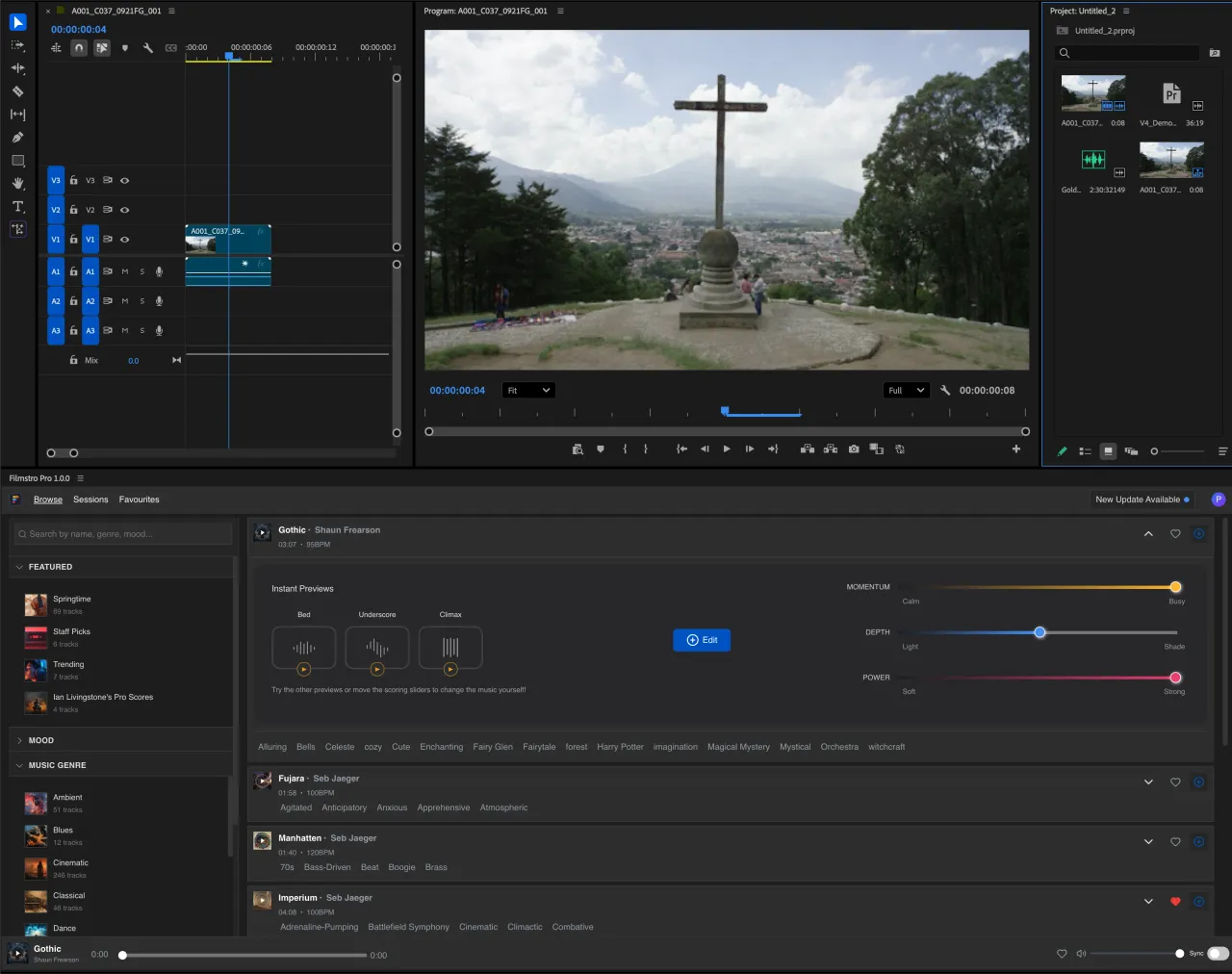
Filmstro for Premiere Pro
An adaptive music studio built as a signed Adobe Premiere Pro extension, so editors can browse, shape and export music without leaving their timeline.
CRM and licence management for a teleprompter manufacturer, plus a custom API so hardware can activate and validate licences in the field.
CRM, licence management & custom API · Delivered through an agency partnerExplore the case study
07FAQ
Questions we get asked
What do you need to scope the work?
To scope the work we need to know what visitors must be able to do on the site and what your team needs to manage. Tell us the job the site has to do, in your own words, rather than a specification. Include any existing designs, the content you already have, and the systems the site must connect to, such as a CRM, a payment provider or an accounting system. We use those details to agree the page types, the functionality and the handover requirements, and we put that agreement in writing. The written scope also records what we have assumed and what is explicitly not included. If something in the brief will not work, you hear it at this stage rather than in week six. You do not need to write the specification yourself. Bring the problem and we will help write that part with you.
Do we need an application, or will a website do?
Usually a website with two good forms will do. Many projects that arrive described as an application turn out to be a content site with a well-built enquiry form and a way for your team to edit it. We will say so if that is the answer. It is a smaller project, and telling you that at the start is worth more to us than the difference in fee. A custom application is the right call when the site needs real accounts, permissions, an audit trail and somewhere for the data to go. Portals, dashboards, booking and quoting systems and member areas fall into that category. So does the spreadsheet that has stopped working at about thirty users. We recommend the tools that fit your requirements before you commit to a budget, and the recommendation is written down in the scope so you can check it.
Do you work with our existing hosting?
Yes, in most cases we work with your existing hosting. Moving a site is a decision you make, not one we make for you, and the build does not depend on it. If the hosting is the reason the site is slow or keeps falling over, we will tell you, with the evidence, so you can decide whether to move it. The build is handed over with documented deployment instructions and the environment variables it needs, so it can run on the hosting you already have or on new hosting later. Hosting remains a separate and optional agreement after launch, in the same way as support and maintenance. If you would rather we ran it, see hosting. If you would rather keep it where it is, nothing in the code only works while we are involved.
How do you handle changes mid-project?
Anything outside the written scope comes back to you as a short note with the cost and schedule impact before we build it. That way it is your decision rather than a surprise on the invoice. The scope we agree at the start records what the site does, what it does not do, and what we have assumed, so it is clear when a request falls outside it. Small changes inside the scope are simply part of the build. Work goes into your repository in reviewable pieces on a fixed check-in rhythm, with one named contact, and you can see it running on a staging URL from early on. That means changes tend to surface early, while they are still cheap to make. For applications, we would rather agree before launch how changes get requested and paid for than have that conversation for the first time when something is urgent.
08Next step
Start a project
Tell us what you are trying to build and when it needs to be live. If we are not the right people for it, you will hear that first.